Why this exists
Good teaching doesn't happen by accident — it's designed.
Teaching That Lands is a free, openly licensed CPD programme for anyone in healthcare who has ever been asked to teach something.
The problem
We keep doing education wrong.
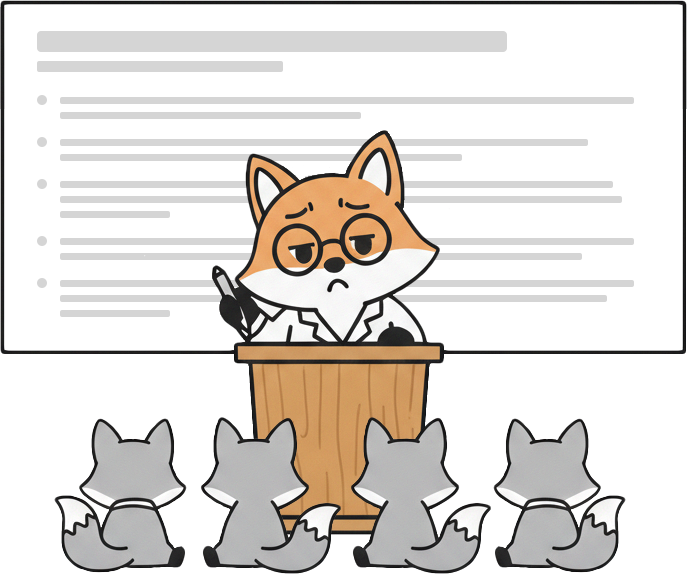
Someone asks you to “do a teaching session”. You open PowerPoint. You add bullet points until it looks comprehensive. You present it. People are polite. Nothing changes.
This isn’t a failure of effort or expertise. It’s a failure of default — a default so embedded in how healthcare organisations think about education that it rarely gets questioned.
- Day-and-done. Mandatory training delivered once, ticked off a spreadsheet, forgotten by Friday. A single passive exposure to information does not produce behaviour change. We know this. We keep doing it.
- Telling people things. If people just knew the right information, they’d do the right thing. So the solution to every knowledge gap is more slides, more pages of policy, more emails to inboxes no-one opens. The gap between work as prescribed and work as done widens.
- Good education happens by accident. The debrief that ran over. The registrar who ditched slides because the projector was broken and found it worked better. These aren’t flukes. They’re glimpses of what education looks like when the default gets disrupted.
Our solution
Three sessions. The right three.
We could have built ten sessions. There’s easily enough material. But we started with a different question: what are the things that, if every clinical educator in the country understood them, would move the needle most?
The answer was surprisingly consistent. How you design information. How people actually learn and retain it. How to build sessions that change behaviour rather than just deliver content. That’s the baseline — and getting that baseline established across the workforce was always the priority.
Underneath all three sits one question: what do we need people to do differently, and how will our teaching make that happen? Most teaching starts with the content or the agenda. This programme starts with the change, and builds everything else from there.
Advanced sessions may follow. But these aren’t advanced topics for formal educators: they’re fundamentals that apply whether you’re running a training day or explaining a procedure to a student on shift. The foundation comes first.


Beyond the programme
The knock-on effects.
The principles here don’t stop at the seminar room door. A ward email that buries the key information in paragraph four. A handover that lists facts without flagging the ones that matter. A policy document no-one reads. These are all teaching moments — and they fail for the same reasons bad sessions fail: cognitive overload, no retrieval cue, no relevance.
One educator who changes their default doesn’t just run better sessions. They communicate differently. Their learners develop higher expectations of teaching. Some of those learners become educators. The default starts to shift.
Good education is also an equity issue. Dense slides disadvantage people with dyslexia. Jargon-heavy delivery disadvantages non-native speakers. Designing education well isn’t a nicety — it’s part of the same professional obligation that governs everything else.
About the author
Who made this?
I started out as a paramedic. You learn to teach fast in that world — not in seminar rooms, but on the back of an ambulance at 3am with a student who needs to be able to do this for real, soon. Nobody gave me a framework for that. I picked it up through repetition, instinct, and occasionally getting it wrong.
I moved into Advanced Practice, eventually into a Trust Lead for Enhanced and Advanced Practice, and along the way became a University Lecturer — rebuilding several modules from scratch. One was non-medical prescribing: NMC-regulated, taken by clinicians with wildly different backgrounds and a patient safety endpoint. These weren’t sessions where it was fine if people forgot by Friday.
Most of what’s in this programme came from that problem — designing education that had to work. I’m a Fellow of the Higher Education Academy (FHEA) through AdvanceHE. This is my attempt to close the gap between what we know works and what actually gets used. Freely, and for anyone who wants it.

Contact
Get in touch.
Questions, feedback, or a session you’d like help running? Say hello: hello@teachingthatlands.uk.
Privacy
What we count, and what we don’t.
To learn whether the site is useful, we use GoatCounter, a small, privacy-friendly analytics service. It counts page views, which page you came from, and your rough country, browser language and screen size. It also counts clicks on links to papers and other outside sites, and downloads of slides and handouts.
It sets no cookies, doesn’t track you across sites, and doesn’t store your IP address or anything that identifies you, so there’s no cookie banner. We don’t collect anything else, and if you email us we use your address only to reply.
The totals are public: see the stats page.

This is free. Help keep it that way.
Teaching That Lands is and will remain free. All materials are openly licensed. No courses to sell, no subscriptions, no certification fees. If you’ve found it useful and want to support future sessions and maintained materials, a contribution via Ko-fi helps.
No pressure. Genuinely.